German and American cockroaches require distinct mechanical approaches due to contrasting biology and nesting behaviors under Gulf Coast humidity conditions. Blattella germanica (German roaches) nest strictly indoors…
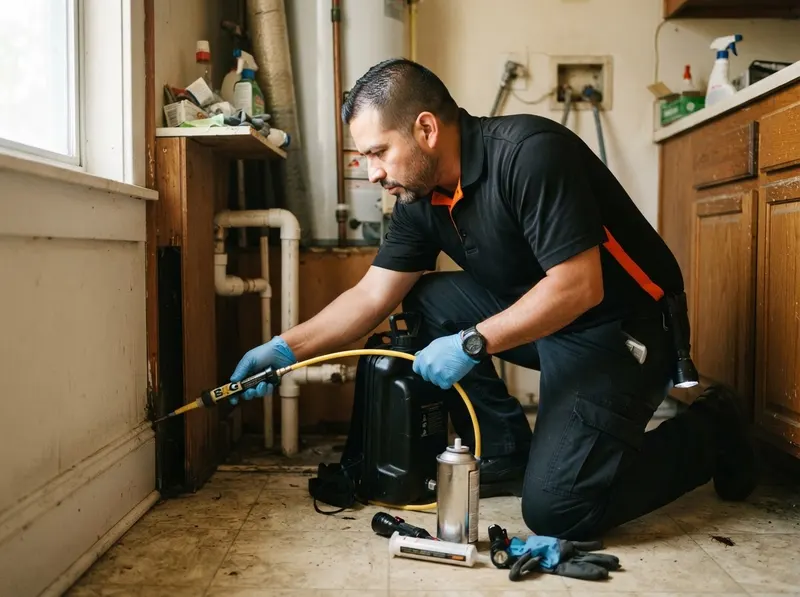
German and American cockroaches require distinct mechanical approaches due to contrasting biology and nesting behaviors under Gulf Coast humidity conditions. Blattella germanica (German roaches) nest strictly indoors within 10 to 12 inches of food and moisture points, commonly clustering inside kitchen cabinetry hinges, motor housings of refrigerators, and bathroom drywall hollows. Retail aerosol sprays scatter these populations deeper into interior wall studs, triggering rapid egg-case reproduction through reproductive stress. Remediating German roaches demands precision bait placements containing active matrices that transfer through the colony, paired with juvenile hormone mimics that arrest the molting cycle without driving insects into neighboring rooms.
Periplaneta americana (American roaches, often called palmetto bugs) measure up to 2 inches long and establish primary harborage in outdoor mulch beds, storm drains, and damp subfloor crawlspaces common to historic pier-and-beam foundations in The Heights and Montrose. These pests migrate indoors through plumbing penetrations, damaged exterior sweeps, and unsealed weep holes along slab foundations. Remediation for American roaches focuses on structural containment: applying microencapsulated barrier barriers along foundations, treating attic soffits near overhanging oak branches in Memorial and River Oaks, and injecting desiccating dusts into plumbing chases beneath sinks.
Decision trade-offs center on chemical chemistry versus mechanical exclusion speed. A single-application spray fails because it bypasses the 28-day gestation period of viable German cockroach oothecae. Homeowners choosing one-time perimeter treatments over systematic baiting will eliminate occasional foraging American roaches entering from Buffalo Bayou Park runoffs but will fail to control breeding German roaches in kitchen appliances. Properties located in flood-prone pockets like Meyerland or older humid pier-and-beam properties in West University Place require synchronized interior baiting combined with subfloor ventilation checks to prevent recurrent seasonal invasions. Technicians isolate applications away from return-air HVAC intakes and baseboards to ensure treated residences remain safe for domestic pets once drying periods elapse within two hours.
Every job gets a firm, written price after a free on-site visit.
Tell us about your german and american cockroach remediation job in Houston and we'll send a clear, written quote, usually the same day.
 Silver Wagon Pest Control